মঙ্গলবার, ২৭ অক্টোবর ২০২৬

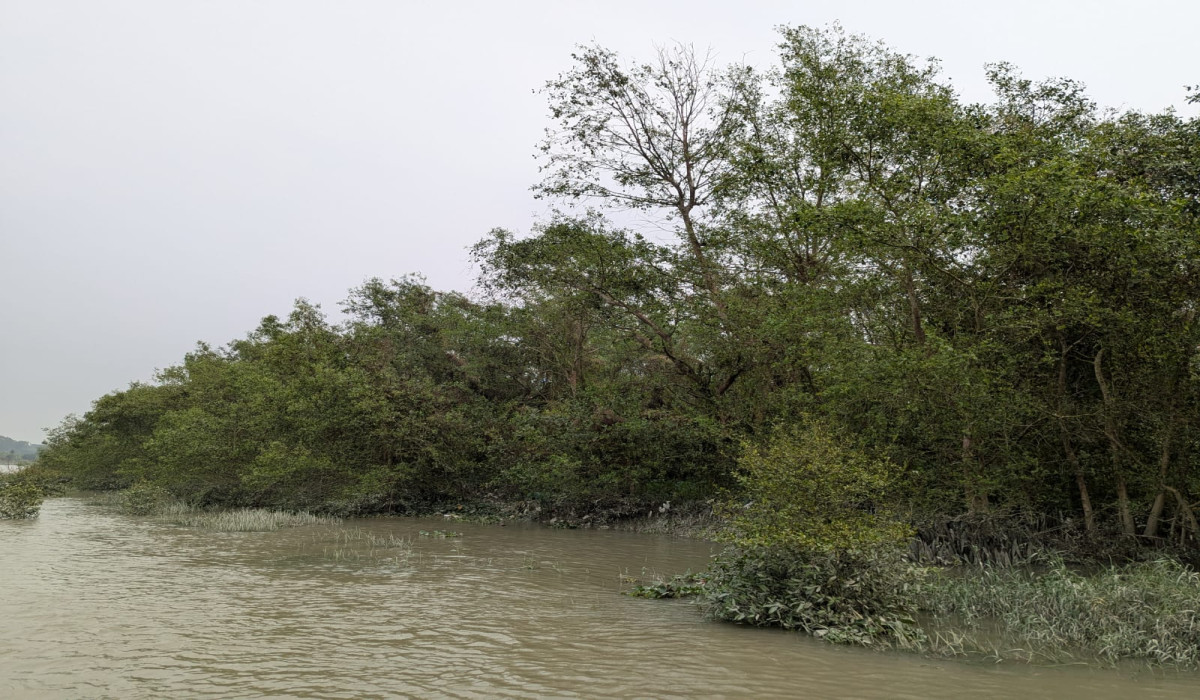
Mangrove forests are naturally taking root along both banks of the Halda River, highlighting the increasing salinity in its waters. Over the last decade, numerous small and large mangrove forests have slowly emerged on either side of the Halda River, and this change has become a familiar sight for the local community.
Different species such as Keora (Sonneratia), Hargoza (Acanthus ilicifolius), and even the “White Mangrove” (Laguncularia racemosa), which is indigenous to the West African and Atlantic regions, have been identified along the Halda River.

Muhammad Abdur Rahman, Director of the Center for People and Environ and a climate scientist, first observed this change while studying the effects of salinity on the Halda River and exploring mitigation strategies.
Following his findings, a comprehensive survey from Madunaghat to Sattarghat along the Halda River uncovered a variety of small and large mangrove forests.

A field visit along the Halda River shows rows of Keora trees lining its banks. Conversations with locals reveal that these trees were not planted intentionally but have grown naturally. Locals refer to them as “Kafra trees” in their dialect. It is believed that the seeds of these trees floated in with the tidal currents, got trapped in the silt, and germinated. Among the mangrove trees growing along the Halda River, Keora is the most abundant. These trees thrive in saline soil, and numerous aerial roots (pneumatophores) have been observed at their bases, indicating future forest expansion.
Hargoza is another plant found in the region, which typically grows in areas affected by tidal saltwater fluctuations, making it an indicator species of salinity. Experts suggest that wherever saline water and soil exist, Hargoza trees can be found along the banks of rivers, canals, or estuaries.